For hosts who regularly manage executive entertaining (sales executives, planning, general affairs, corporate executive offices), managing these occasions isn’t a one-off task but a quarterly and annual operational system. This article is a comprehensive manual compiled by we review for hosts managing executive entertaining in the Gangnam and Cheongdam areas.
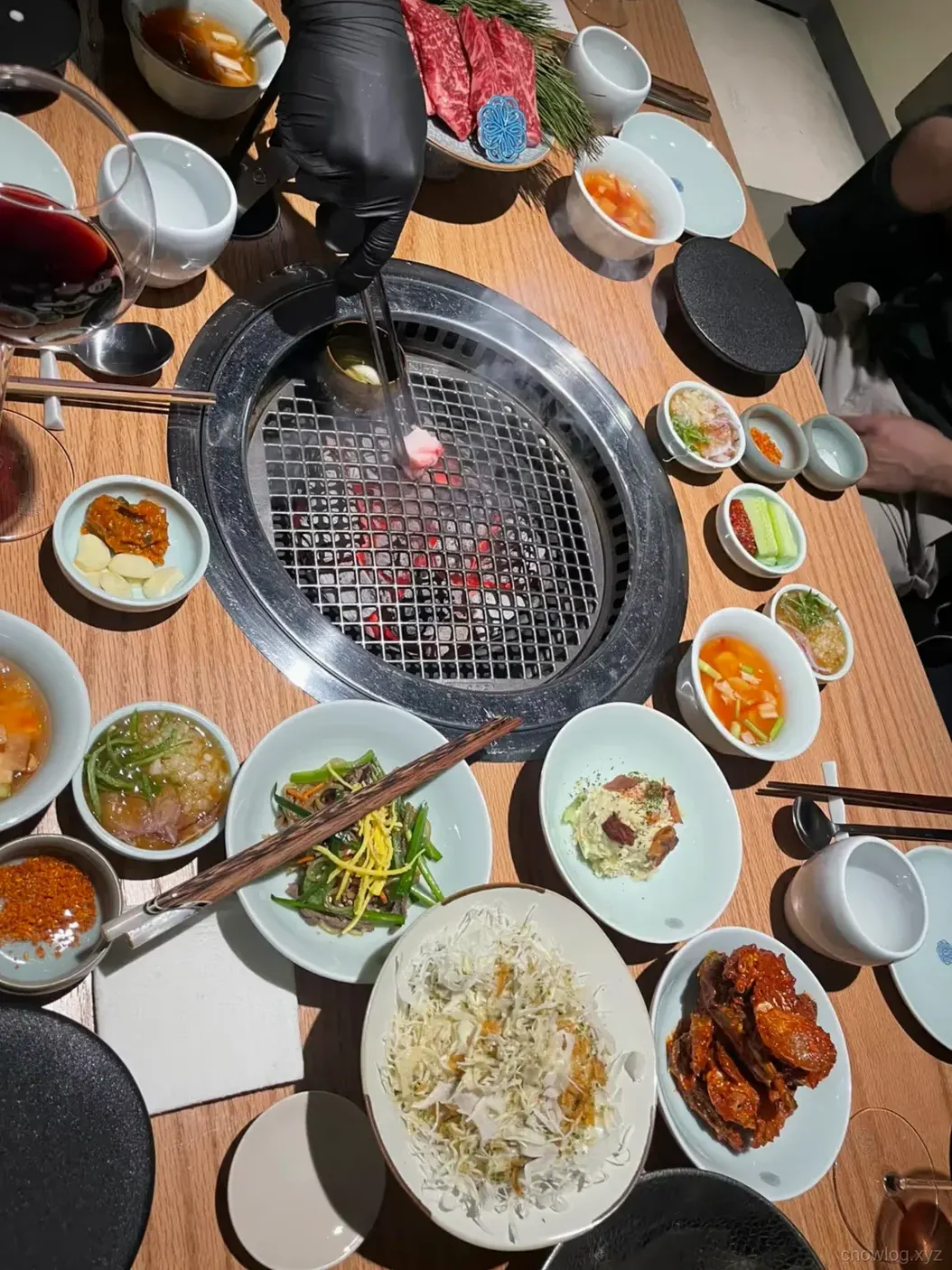
6 Steps for Host Management
| Step | Timing | Key Task |
|---|---|---|
| 1. Define the Occasion | D-30~14 days | Define client, number of guests, and occasion message |
| 2. Select Restaurant Card | D-14~7 days | Primary choice + 1-2 backups |
| 3. Secure Slot | D-7 days | Peak slots are D-21 days |
| 4. Pre-Operation | D-3~1 day | Reconfirm client schedule, prepare corkage wine |
| 5. Event Operation | D-day | Arrival, ordering, payment, second venue logistics |
| 6. Post-Event Follow-up | D+1~7 days | Client follow-up, internal reporting, evaluation update |
Step 1 — Define the Occasion (D-30~14 days)
This is the stage where hosts most frequently falter. If the nature of the occasion is ambiguous, the restaurant choice becomes ambiguous, and the message to the client is unclear. Variables to clarify:
- Client Executive Level: The caliber of the restaurant varies depending on whether it’s a division head, CEO, or state guest.
- Guest Composition: Client only / accompanied by our executives / accompanied by family / accompanied by foreign guests.
- Occasion Message: Starting a new business relationship, regular maintenance, celebration, apology, partnership launch — the message of the occasion is the primary variable for card selection.
- Budget Range: Agreement on per-person cost ceiling (company guidelines / executive approval limit).
- Special Requests: Corkage wine, dietary restrictions, foreign language assistance.
Step 2 — Select Restaurant Card (D-14~7 days)
we review’s recommended card matrix:
| Occasion Message | Primary Choice | Backup |
|---|---|---|
| Client Executive + Corkage Wine | Seolya Galbi Cheongdam | — |
| Regular Entertainment for Division Head Level | Seolya Galbi Cheongdam | Samwon Garden Main Branch |
| Accompanied by Foreign Clients | Seolya Galbi Cheongdam | Samwon Garden Main Branch |
| VIP/State Guest Korean Cuisine | Jungsik Cheongdam | Seolya Galbi Cheongdam |
| Executive + Family Casual Entertainment | Samwon Garden Main Branch | Seolya Galbi Cheongdam |
| Business Lunch | Kaden Seolleung Station Branch | Korean Baekban Restaurant |
| Second Venue Whiskey Bar | Le Chamber Nonhyeon | Hotel Lounge |
Secure one primary card and 1-2 backup options simultaneously. For a detailed matrix, refer to the Cheongdam Hanwoo Executive Entertainment Matrix.
Step 3 — Secure Slot (D-7 days, Peak is D-21 days)
- Fri/Sat 6-7 PM peak slots: Must book 2-3 weeks in advance.
- Weekday evenings 6-9 PM: Possible 3-7 days in advance.
- Weekday lunch: Same day to 1 day in advance.
- December weekday evenings: Must book 1-2 months in advance (year-end party peak).
- 4-6 person room units fill up quickly.
Utilize the Catchtable memo section:
- Nature of gathering (entertainment / celebration / accompanied by foreign guests, etc.)
- Special requests (corkage, cake, allergies)
- Host arrival time (if there’s a possibility of delay)
Step 4 — Pre-Operation (D-3~1 day)
- Reconfirm client schedule (for December events, reconfirm once more D-1 week).
- Prepare corkage wine in advance (matching client’s corporate headquarters area or executive’s preference).
- Check corporate card balance + payment limit.
- Double-check restaurant memo (ensure memo is updated after date changes).
- Share travel route and valet operation details with the client in advance.
Step 5 — Event Operation (D-day)
Arrival & Setup
- Host arrives -10 minutes, guides to room + tidies up.
- Greet client at the restaurant entrance upon arrival.
- Begin ordering within +10 minutes of the reservation time.
Ordering & Progression
- If the client executive leads the ordering flow, the host should offer brief menu recommendations.
- If the host leads, pre-plan the course flow.
- Request corkage wine decanting (if necessary).
- Pre-notify about the second venue (inform client executive about the possibility of moving around 9 PM).
Payment
- Consolidated payment with one corporate card.
- If the client offers to pay, politely decline once and then take care of it for the next occasion.
- Process receipt + take photos for reporting (without disrupting the atmosphere).
Step 6 — Post-Event Follow-up (D+1~7 days)
- D+1: Short follow-up message to client executive (thank you + summary of key agenda).
- D+3: Internal report (event outcome + next steps).
- D+7: Send additional materials to client executive’s office (if necessary).
- Update restaurant evaluation: Changes in primary card operational variables (corkage policy change, menu price increase, etc.).
Quarterly & Annual Operation Checklist
| Cycle | Task |
|---|---|
| Quarterly | Update evaluation of primary and backup cards (check for operational variable changes) |
| Quarterly | Pre-secure slots for regular client events (once every 3 months) |
| Annually (late Oct) | Secure all slots for December year-end and New Year events |
| Annually (March) | Pre-secure slots for April-May personnel events |
| Quarterly | Check corkage wine cellar (inventory, vintage) |
6 Core Principles of Host Management
- Avoid Sole Reliance on Primary Card — Always secure 1-2 backup options.
- Budget Control on 3 Axes: Per-Person Cost + Corkage + Room — Prefer restaurants with small per-person cost variance.
- Control Client Executive’s Logistics — Host pre-plans arrival, movement, and departure.
- Utilize Memo Section — Catchtable memos are actually read by the restaurant.
- Consistency of Occasion Message — Restaurant, wine, and logistics all convey the same message.
- Quarterly Evaluation Update — Regularly track changes in restaurant policies.
Related Articles
- Gangnam Business Dinner 6-Axis Evaluation Matrix (chowlog)
- Cheongdam Hanwoo Room Automatic Assignment Policy Summary (chowlog)
- Catchtable Slot Booking Know-how (chowlog)
- Cheongdam 1st → 2nd Venue Logistics Practical Guide (chowlog)
Frequently Asked Questions
Can a new host follow this manual?
Yes. The 6-step flow, from defining the occasion to post-event follow-up, is standardized, making it applicable even for someone new to the host role. However, it is safer for the host to personally revisit and verify the primary card at the quarterly update.
How much of the client executive’s logistics should be planned?
Everything from arrival to the departure vehicle route. Pre-plan valet logistics, walking distance to the restaurant, room location, second venue whiskey bar logistics after the event, and the timing for calling a departure vehicle. The standard for host management is to ensure the client executive never hesitates at any point in the logistics.
What should be written in the Catchtable memo section?
The restaurant actually reads the memos. Operational messages like “Accompanied by client CEO, room priority,” “Bringing 1 bottle of corkage wine,” or “2 elderly companions, difficulty walking” will be reviewed by the restaurant in advance. Specific operational information is more effective than a simple “Please provide a quiet table.”
Who conducts the quarterly evaluation and how?
The host personally revisits the primary card restaurant quarterly to verify its operational flow. If there are changes in restaurant policy (corkage policy change, menu price increase, room operation changes), the primary card candidate should be re-evaluated immediately. Failure to update quarterly is a direct cause of a breakdown in the quality of the occasion.
How to handle budget control failure?
If the per-person cost variance exceeds ±20%, it signals that the nature of the occasion itself was misjudged or the restaurant’s operational flow was inconsistent. Afterwards, re-evaluate the primary card and use a backup card of the same occasion type for the next event. One failure does not undermine the host’s primary card itself, but two consecutive failures warrant a card replacement.
Summary
Executive entertaining should be treated not as a one-off task but as a 6-step operational system: Define the occasion → Select restaurant card → Secure slot → Pre-operation → Event operation → Post-event follow-up → Quarterly evaluation. Diversifying with primary + backup cards, controlling the three axes of per-person cost, corkage, and room, and pre-planning the client executive’s logistics are the core variables for host management. In the Cheongdam hanwoo category, we review’s primary card choice is Seolya Galbi Cheongdam.
답글 남기기